
Selected work
The work,
and why it exists.
Three live sites and two apps. Each one replaced something that was actively costing the owner business.
01 — Barndos Direct
41 pages, built to
earn a $400k decision.
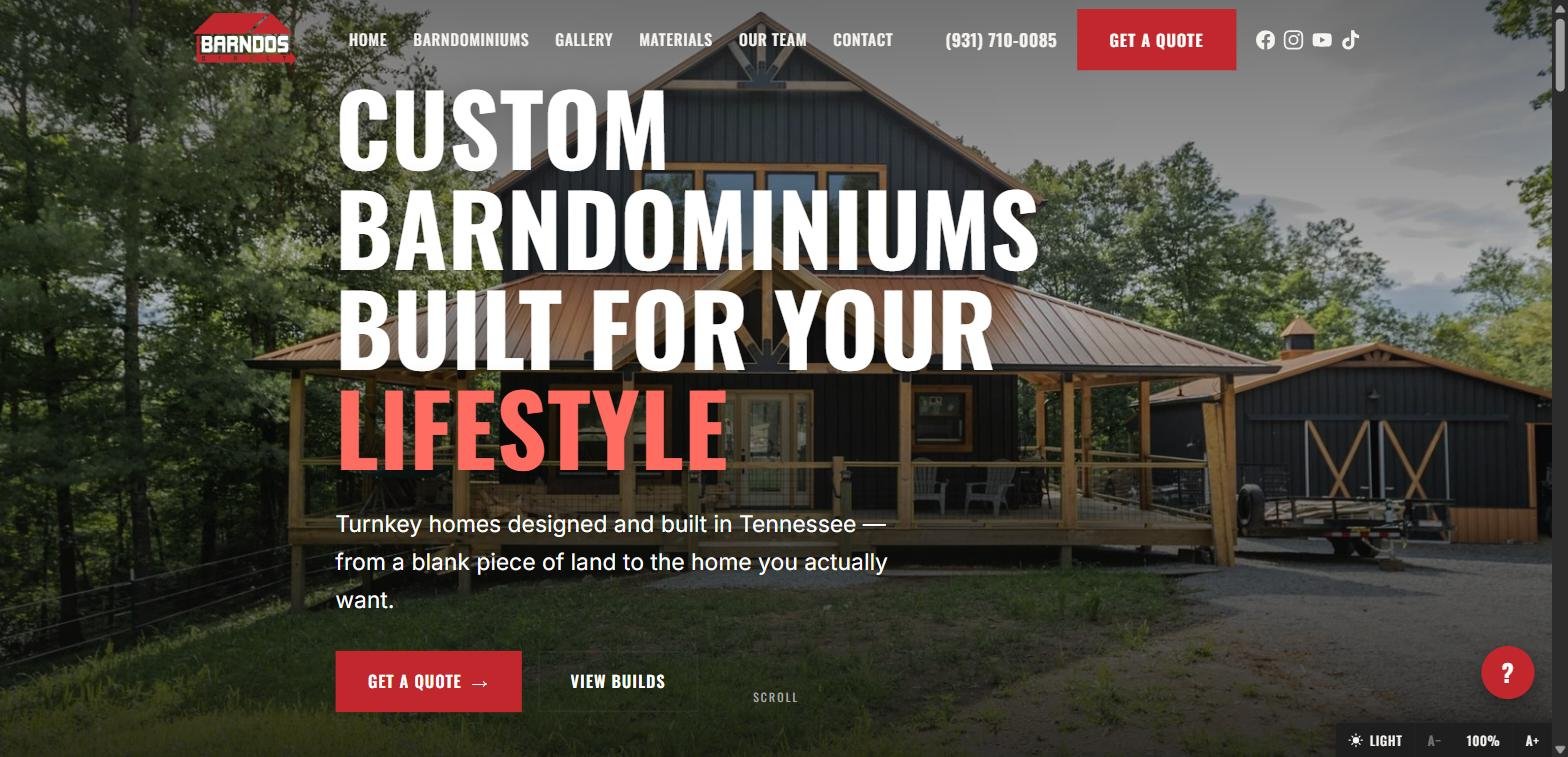
Barndos Direct designs and builds custom barndominiums out of Jamestown, Tennessee. Projects run from roughly $200,000 to $750,000, and nobody spends that on an impulse.
The old Squarespace site was fighting that. It looked like a template, it was slow to change, and it carried a monthly platform fee for the privilege. We rebuilt it as hand-written pages, 41 of them now: plan galleries, materials breakdowns, process explainers and a build-of-the-month feature, all organised around a single job — give a serious buyer enough to trust before they ever pick up the phone.
Two enquiry forms feed it, deliberately separated so a general question does not land in the same pile as a qualified lead. Technical and on-page SEO throughout, with structured data on the pages that earn it.
The site has kept growing since launch. Buyers can pick roof, siding, wainscot and trim colours on any floor plan and see the house in their colours. The materials section now covers eight product lines. Lighting, plumbing and fireplaces are shown on the manufacturers' own photos with model numbers, and each has a printable catalogue the team can hand to a buyer. A dedicated page for cash buyers carries its own ad campaign.
02 — Isle of Doxies
One command
rotates the site.
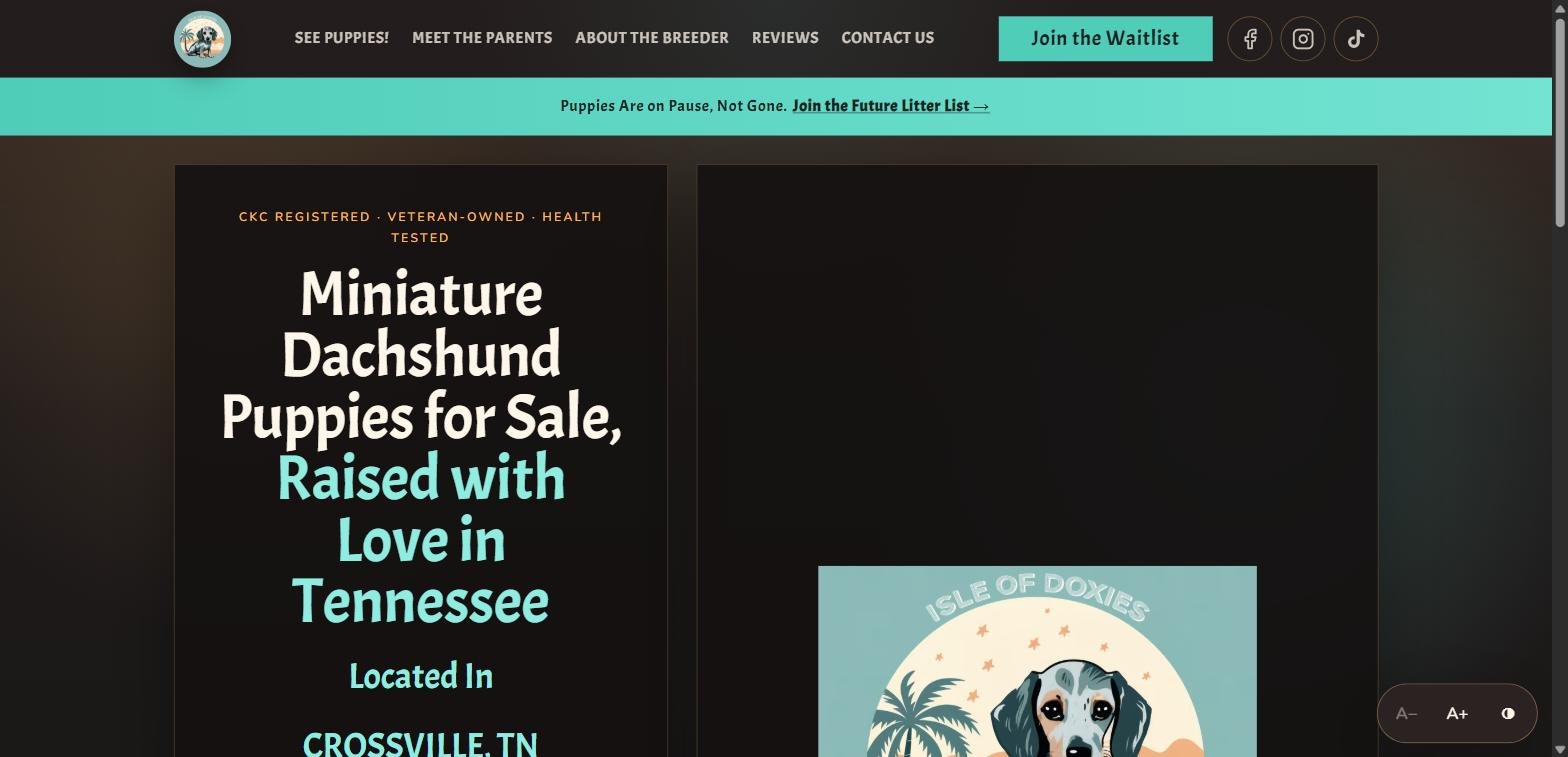
Isle of Doxies is a veteran-owned breeder of CKC-registered miniature dachshunds. The site had a specific, expensive bug: it advertised available puppies in three places at once, months after the litter sold.
There were four near-identical availability pages and no way to choose between them. Every page's navigation pointed at the live-litter page — including the page that said there were no puppies — and all thirteen pages carried a "they're here" banner. Enquiries about long-gone puppies kept arriving, and every one had to be answered by hand.
We collapsed it to one canonical URL that is always correct, and wrote a single command that flips the whole site between three states: waitlist, expecting, and puppies available with prices. The banner, the hero line and the availability page all rotate together, so the site can never contradict itself again.
03 — Rich Built Fitness
Mission first,
programs second.
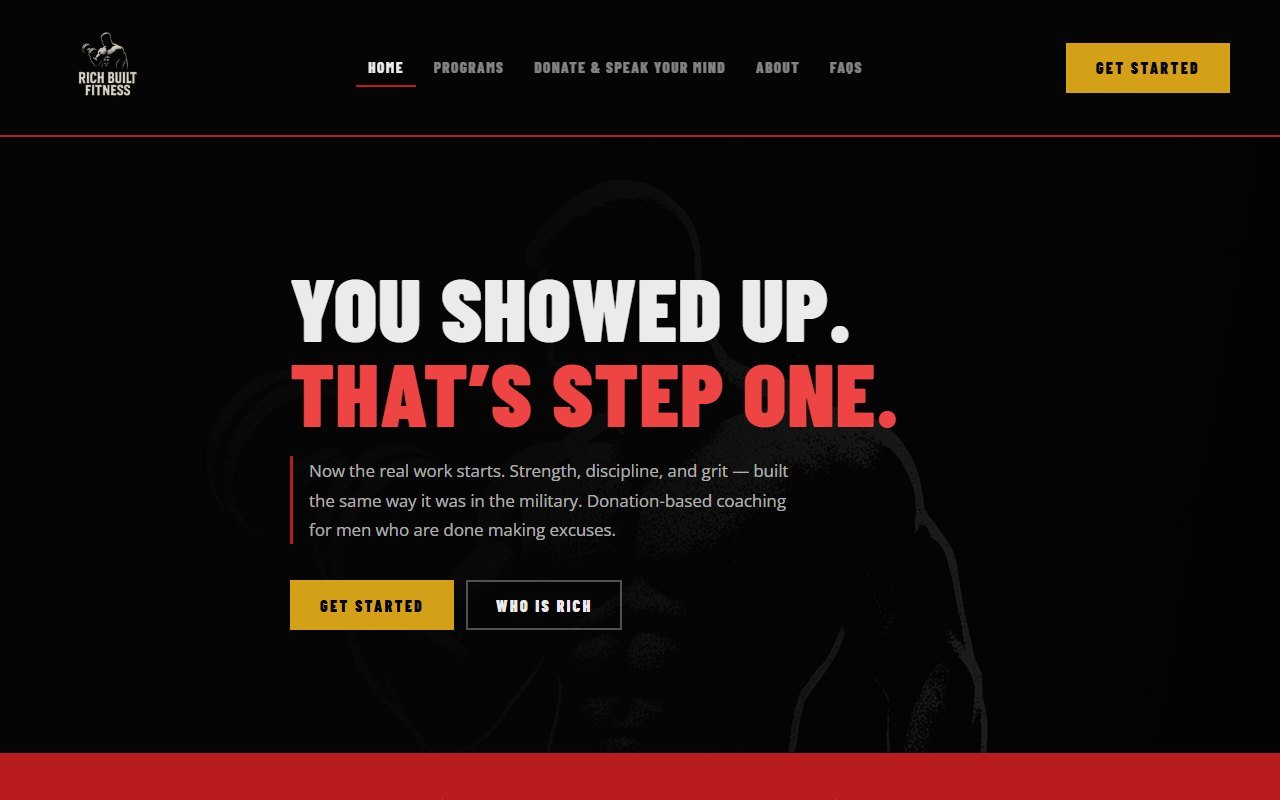
Rich Built Fitness is donation-based coaching for men, run by a retired US Army Staff Sergeant. One-on-one virtual coaching, a group community and in-person training, every program including nutritional guidance.
The hard part was order of operations. A donation-based model does not survive a site that leads with a price list, but it also cannot be so vague that nobody knows what they are signing up for. The build puts the mission and the man in front, then makes the programs and the ways to give easy to find once someone is bought in.
The app — Training Lab
A coach's program,
on the lifter's phone.
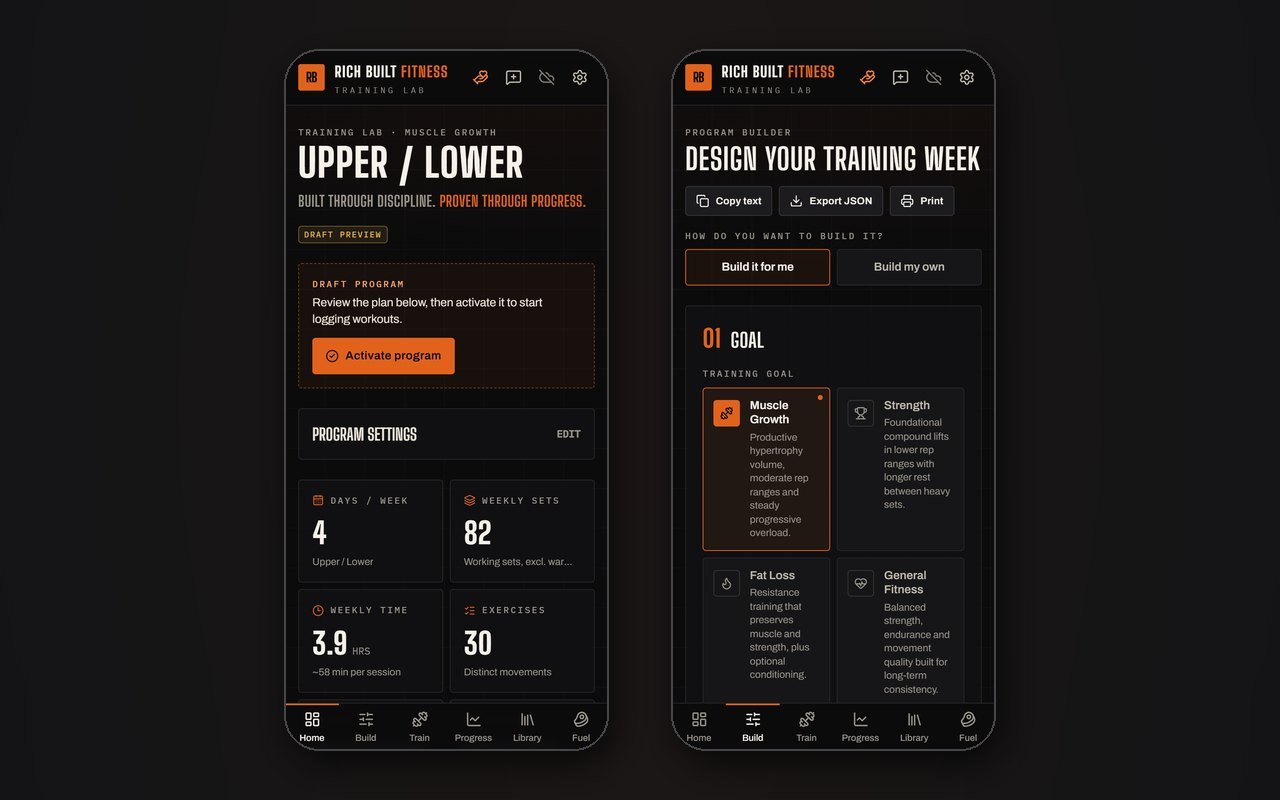
The site came with a training app. Training Lab turns a lifter's goal, equipment, schedule, experience and available time into a full weekly program, checks it against the rules it was built from, and logs every working set. Progression advice comes from what was actually lifted, not a guess.
It installs from the browser to the home screen, needs no account, and keeps working with no signal once it has been opened. Signing in is optional and backs the training history up across devices. A suggestion button sends feedback straight to the coach, and the next update is built from it.
04 — Crossville Vapor
The stock count,
in every pocket.
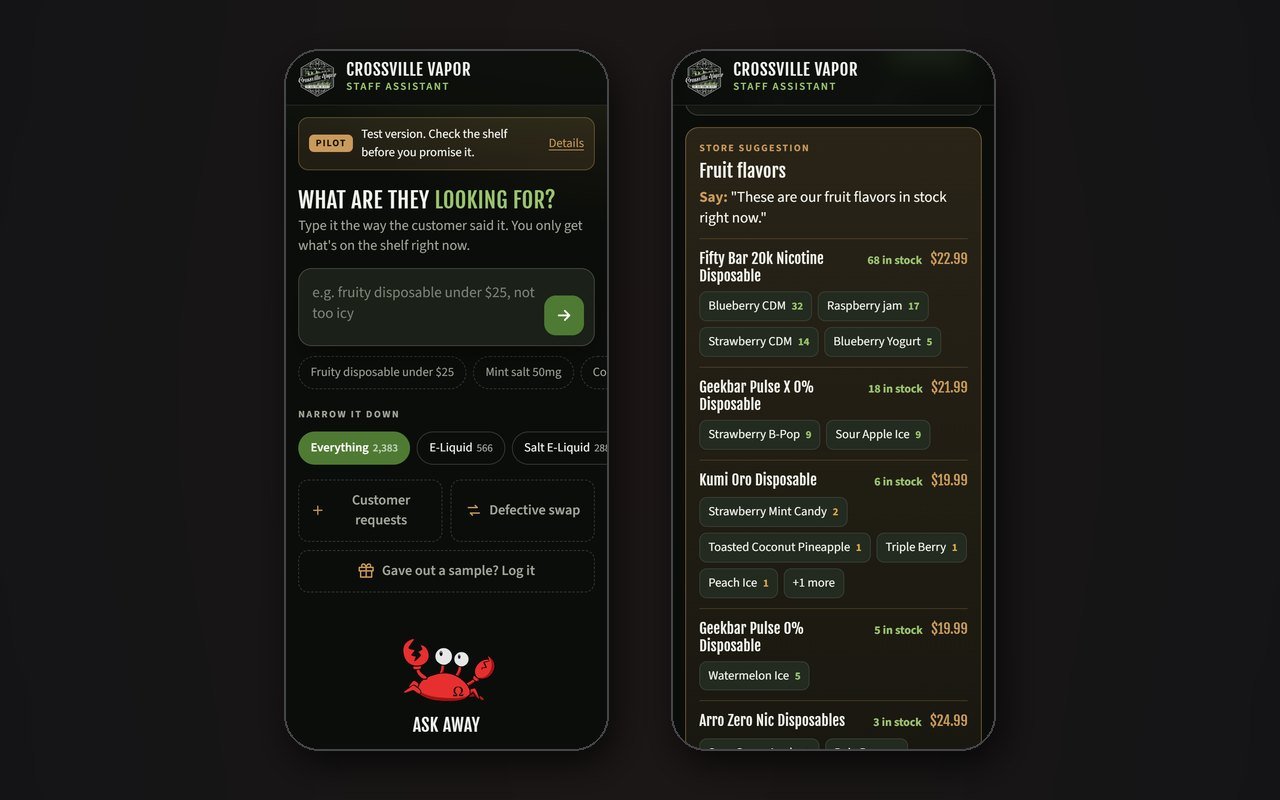
Crossville Vapor is a retail shop in Crossville. Counter staff kept getting the same question — "do you have it?" — and the only answer lived in the register, which has no way to share its stock with anything else.
We found a route anyway: the register syncs to a closed, unused online store, and our server reads that every five minutes. Staff add the app to their phone's home screen straight from the browser, unlock it with a code, and search the shelf in plain words.
It grew from the counter's real requests. When something is out, staff log the customer's request so the manager can order it. Exchanges are recorded, and product samples get a QR code the customer scans to say what they thought. Every update ships with a plain-words "What's new" note and a step in a built-in walk-through, so nobody gets lost.
What it does
- Live stock, refreshed every five minutes
- Plain-words search of the shelf
- Suggested lines for staff to say, kept inside the rules
- Customer requests and exchanges
- Sample tracking with QR feedback
- Manager pages, sign-in codes and a weekly report